The Role of EntryPoint
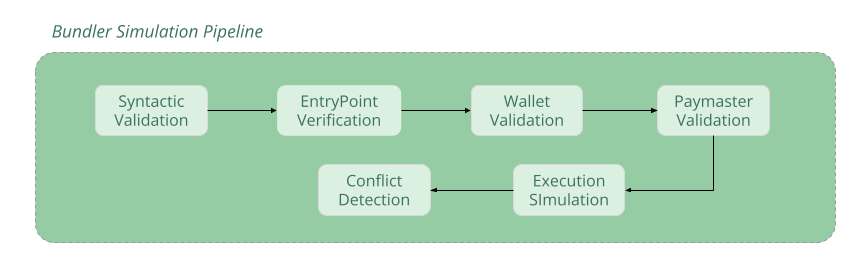
UserOperations do not go directly to the blockchain. They are collected, prepared, and eventually passed into the EntryPoint contract. When the EntryPoint receives an operation, it performs three essential responsibilities. First, it ensures the smart wallet has validated the operation. The wallet must explicitly authorize the UserOperation using its own logic. EntryPoint does not second-guess the wallet’s rules; it only checks that the wallet followed the AAA protocol for verification. Second, EntryPoint ensures the operation can pay for itself. Whether fees come from the wallet, a paymaster, or another mechanism, EntryPoint confirms that the responsible party has sufficient stake or balance to cover the execution cost. If payment cannot be guaranteed, the operation is rejected before any state changes occur. Finally, EntryPoint performs the actual execution. Once validation and fee checks pass, it executes the call defined in the UserOperation within a protected environment. Execution is atomic: either the entire operation succeeds or nothing is applied.A Deterministic Execution Path
One of the challenges of AAA is ensuring that wallets, bundlers, and paymasters behave consistently across the network. EntryPoint solves this by defining a strict execution path. Every operation follows the same lifecycle: validation, fee verification, and execution. This prevents inconsistencies between clients, nodes, or wallet implementations. Because execution flows through one contract, developers can rely on a shared interface for AAA behavior. This reduces complexity and eliminates the ambiguities that often accompany multi-contract, multi-standard systems.